What changes when your AI remembers.
A personal AI with a web dashboard, mobile app, and Telegram access. It starts helpful on day one and gets smarter every day after.
The deep dive -- how it actually works under the hood.
The first 90 days.
Every conversation, every preference, every correction compounds. This is what the first ninety days look like.
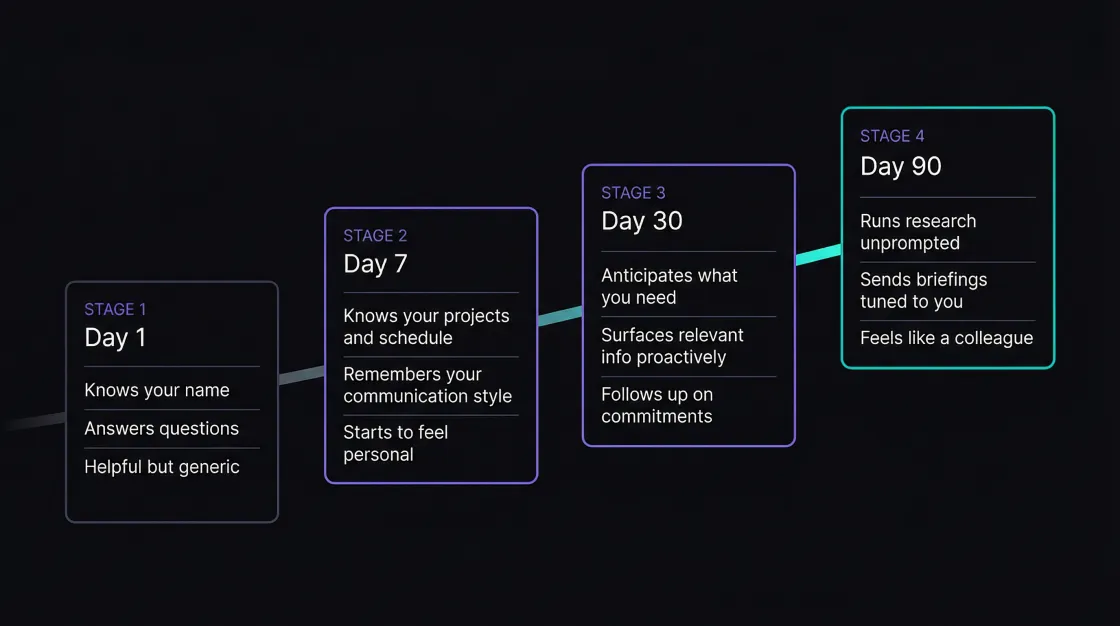
Nothing forgotten.
Three layers of knowledge. The memory layer stores nine types of structured records -- facts, preferences, tasks, ideas, entities -- with bidirectional links and hybrid retrieval that combines vector search, keyword matching, and cross-encoder reranking. The brain layer compiles what it learns into interlinked wiki articles you can browse like a personal encyclopedia. The self-improvement layer tracks what works and what doesn't. Ask about something you discussed weeks ago and it pulls up the context instantly.
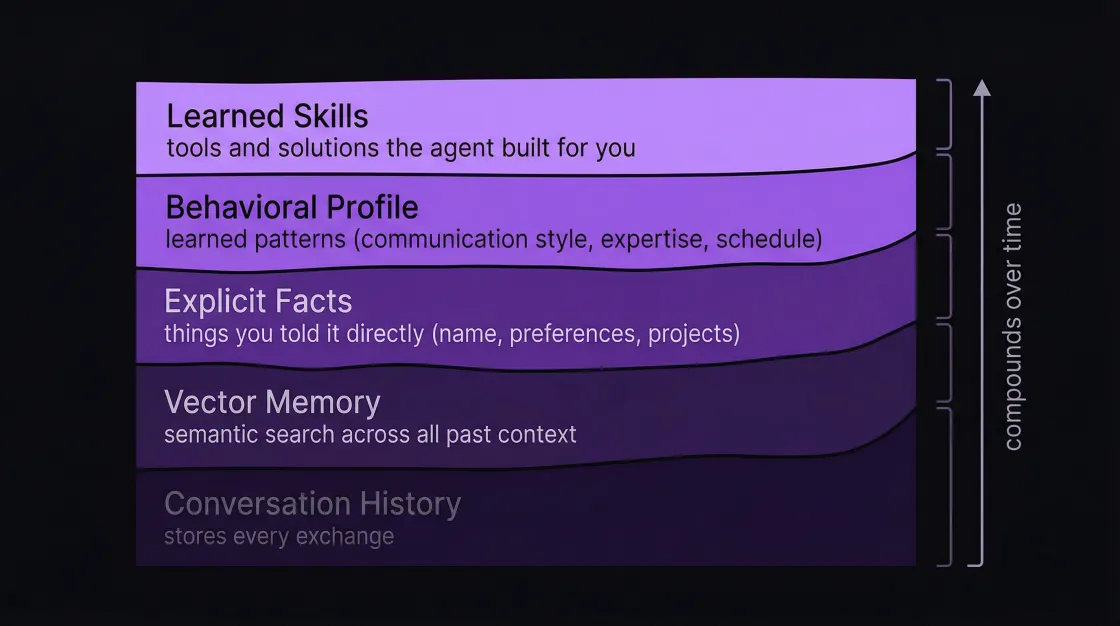
Insight, not information.
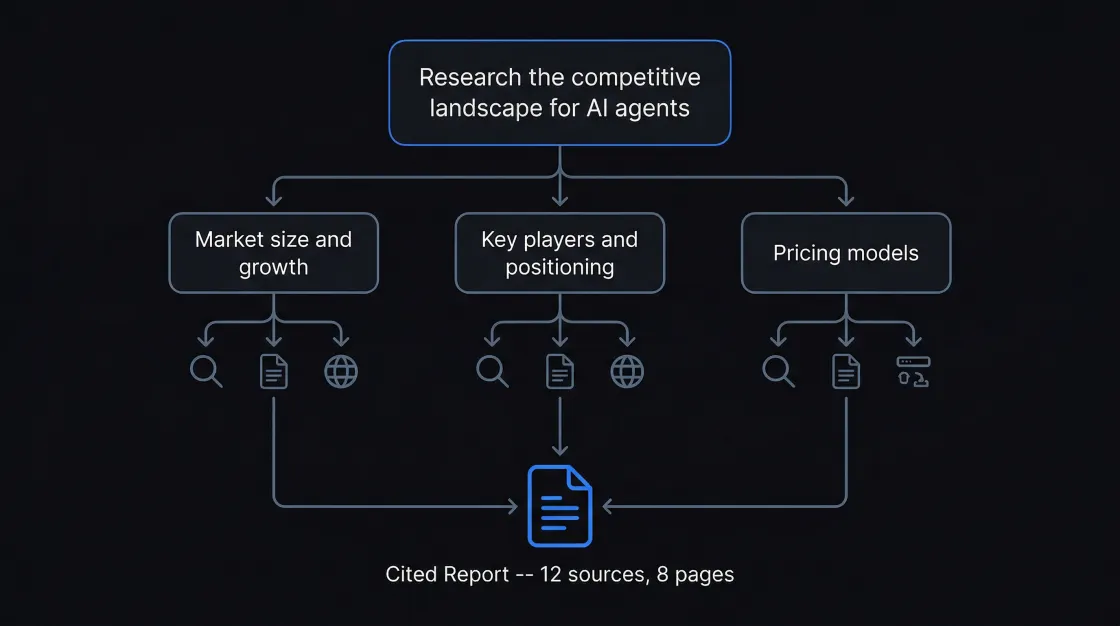
Say "research the competitive landscape for X" and walk away. The agent dispatches a researcher sub-agent that decomposes your question into sub-topics, searches multiple sources, cross-references what it finds, and delivers a cited report. Need slides too? The researcher chains into a presenter sub-agent that formats the findings into a Marp slide deck and renders it as a PDF. Sub-agents run asynchronously -- the agent responds immediately and notifies you when the work is done.
Seven specialists. One orchestrator.
The main agent dispatches specialist sub-agents for heavy work. Researcher for deep research with source citing. Coder for code generation and testing. Analyst for data synthesis. Editor for text refinement. Presenter for slide decks. Summarizer for long content. Brain-compiler for synthesizing memories into wiki articles. Sub-agents run asynchronously in the background with their own persona, tool whitelist, and isolated context. They chain automatically -- researcher into presenter produces a report then formats it as slides without you asking.
Promises kept.
Five dashboard sections: Activity (live hub with goals, plans, budget, and findings), Chat, Notebook (with agent review sidecar -- it comments on your writing), Todo (kanban boards with drag-and-drop), and Documents (every file the agent creates). Proactive follow-up detects commitments in your messages and nudges you when things are due. Calendar integration, email management, and file generation in formats you actually use (DOCX, CSV, Excel, Markdown, PDF slide decks).
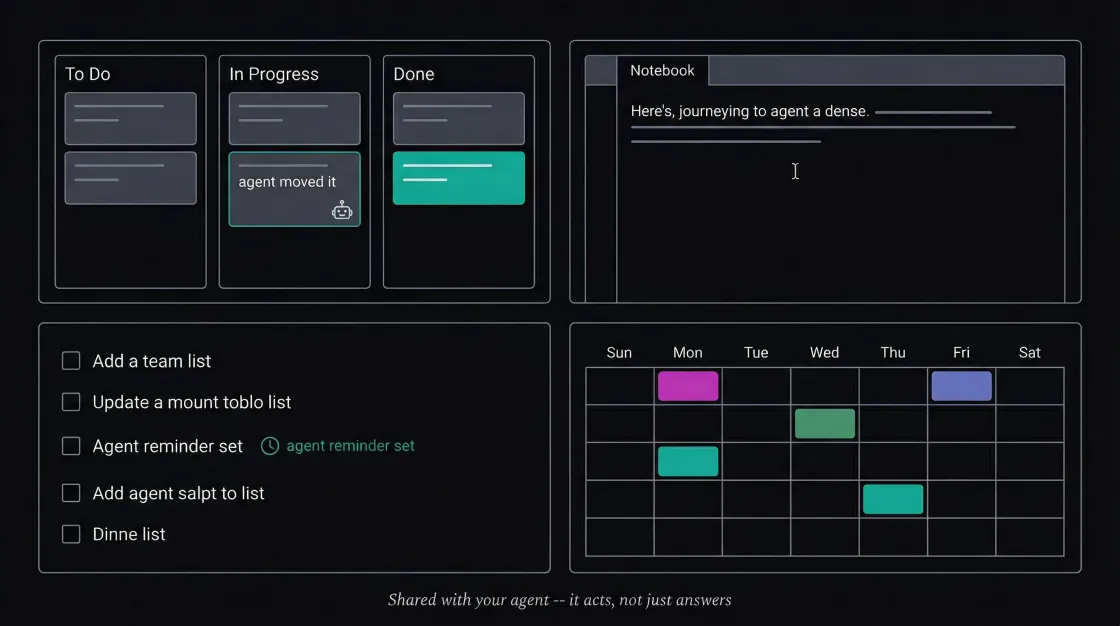
Make things, not prompts.
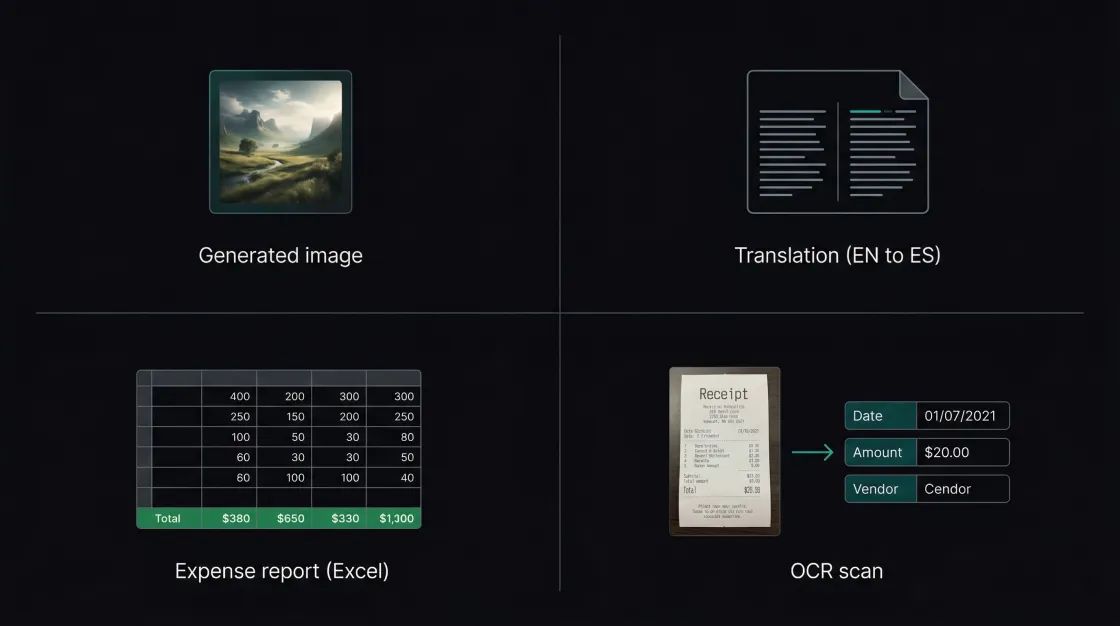
Generate images from descriptions -- photos, illustrations, logos, product mockups. Translate text across 100+ languages. Track structured data like budgets, expenses, and reading lists, then export to Excel. Scan receipts with OCR and log them automatically. Create quizzes for learning and professional development.
Working while you're not.
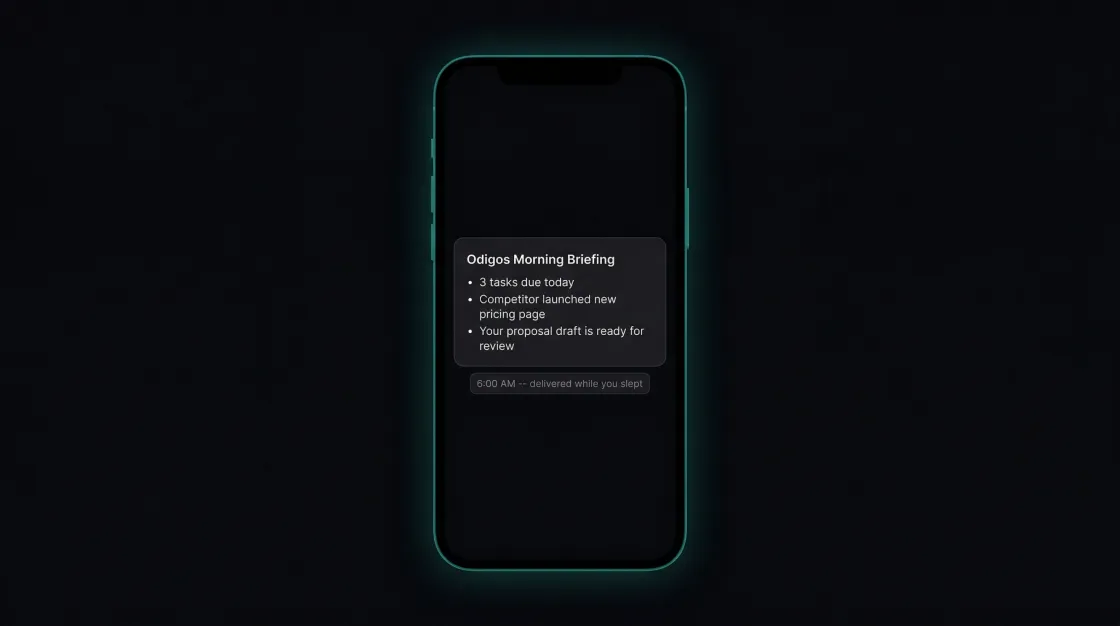
This is the part most AI assistants can't do: work when you're not there. A four-stage pipeline runs when idle: scan for knowledge gaps and unresolved questions, prioritize what matters, execute research, and publish findings to your Activity feed. It reviews your notebooks and adds anchored observations. It detects promises in your messages ("I'll send that by Friday") and follows up. Push notifications, morning briefings, and mobile PWA so it works like a real assistant -- not just when you're typing into a chat window.
Your agent evolves.
It builds its own tools.
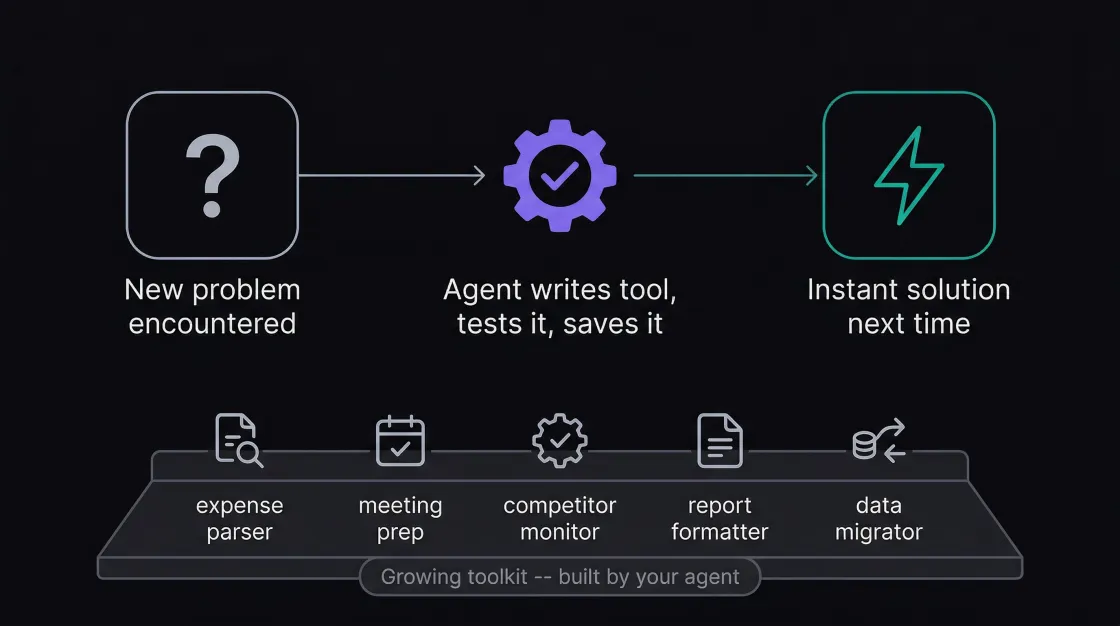
When the agent encounters a problem it can't solve with its current capabilities, it doesn't stop. It writes a new tool -- a small, tested program -- validates it through an isolated evaluation loop, saves the working solution, and reuses it next time. 50+ tools ship out of the box, and the smart tool registry uses JIT schema injection to load only what's relevant per query, not all 50+ at once. Ask it to parse a new file format, calculate a metric it's never seen, or connect to a service. First time, it figures it out. Every time after, it's instant.
It sharpens its own judgment.
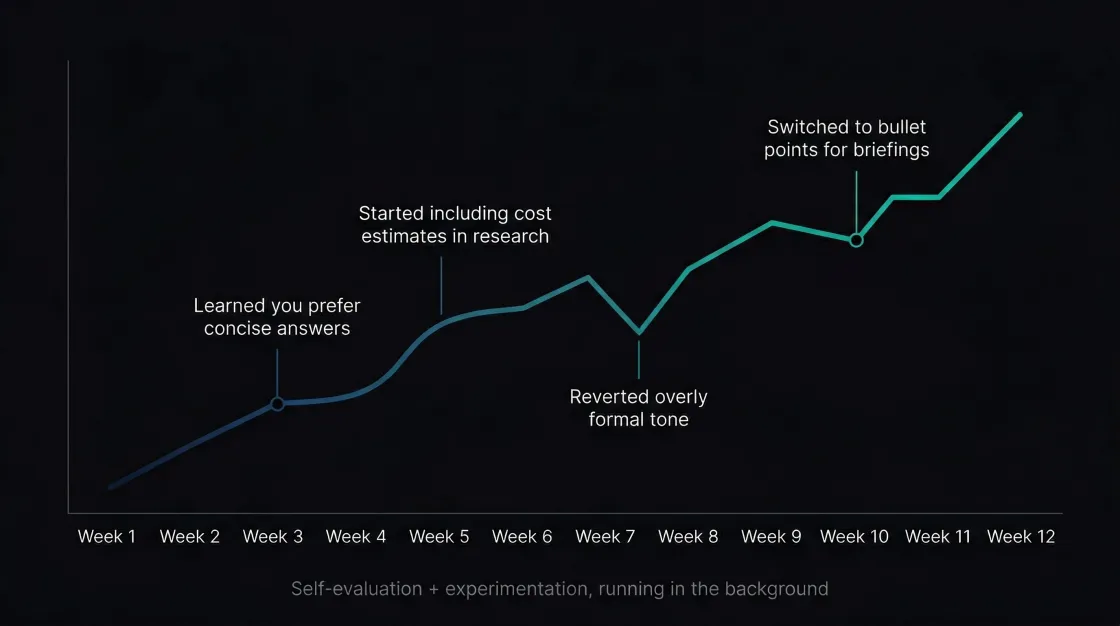
The evolution engine runs continuously. It classifies every query, evaluates every response, proposes experiments, and runs time-boxed trials. Changes that work get promoted. Changes that don't get reverted. Your corrections are consolidated into two personality layers: operational rules (concrete "do X not Y" fixes) and behavioral principles (stable identity patterns). Classification rules, routing, prompt sections, and skills all evolve. Your agent next month is sharper than your agent today. You didn't do anything.
Web dashboard. Telegram. Voice. Mobile app.
Switch between them without losing context. The agent knows what you were discussing regardless of which channel you were on. The web dashboard has five sections: Activity (live hub), Chat, Notebook, Todo, and Documents. Voice chat with selectable voices. Install as a PWA with push notifications and biometric login via WebAuthn passkeys.
Built in the open.
The full framework is open source under the MIT license. Run it yourself on your own server, or let us host it for you. Same agent, same features, your choice.